






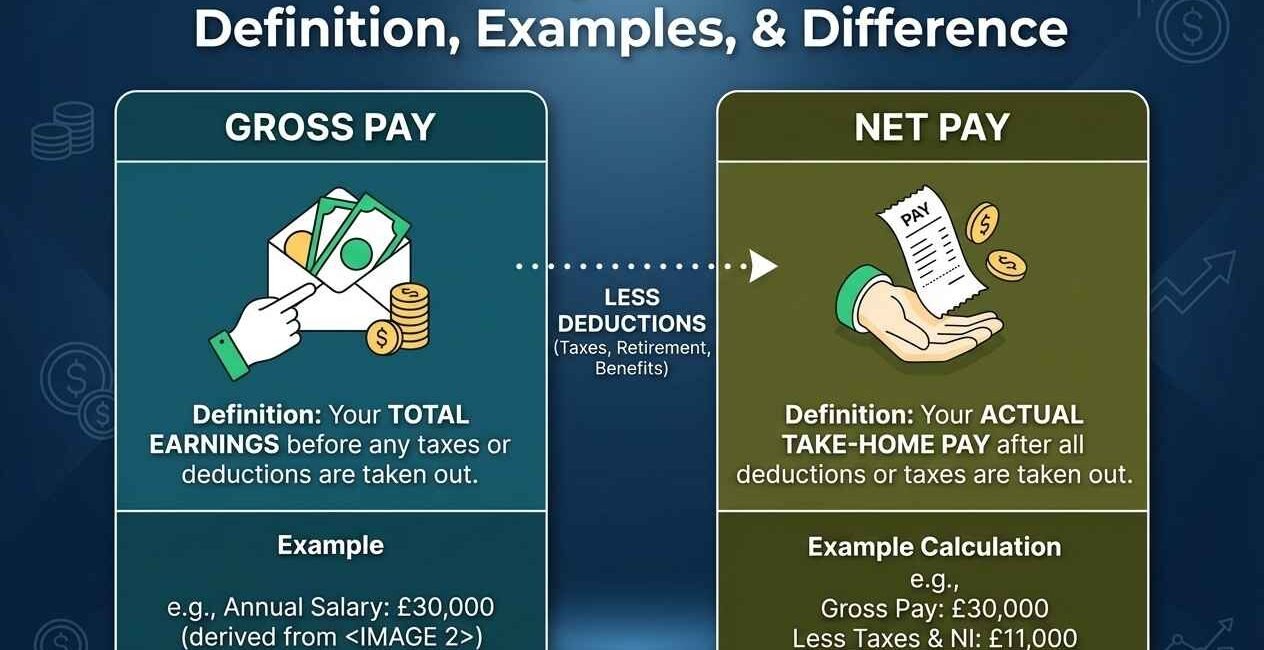
Gross pay and net pay are the two numbers on every payslip, and confusing them is one of the most common reasons people misjudge what they can actually afford. Gross pay is what you earn before anything is taken out; net pay (also called take-home pay) is what actually lands in your bank account. This guide breaks down exactly what’s subtracted between the two, with a worked example.
What Is Gross Pay?
Gross pay is your total earnings before any deductions — your salary or hourly wages multiplied by hours worked, plus any overtime, bonuses, or commission for that pay period. This is the number usually quoted in job listings and salary negotiations.
What Is Net Pay?
Net pay is what’s left after all mandatory and voluntary deductions come out of your gross pay. This is the actual amount deposited into your bank account, and it’s the number that matters for budgeting.
What Gets Deducted Between Gross and Net?
- Income tax — withheld based on your income bracket and country’s tax rules
- Social security / National Insurance — mandatory government contributions (Social Security and Medicare in the US, National Insurance in the UK)
- Pension contributions — if you’re enrolled in a workplace pension or 401(k), often deducted automatically
- Health insurance premiums — if your employer offers a plan you contribute to
- Student loan repayments — deducted automatically once your income passes a repayment threshold, in countries where this applies
- Other voluntary deductions — union dues, charitable giving programs, or salary sacrifice schemes
Worked Example
Say your gross monthly pay is $4,000:
- Income tax: −$600
- Social Security & Medicare: −$306
- Pension contribution (5%): −$200
- Health insurance: −$150
Net pay: $4,000 − $1,256 = $2,744
Notice that gross pay ($4,000) is nearly 45% higher than what actually reaches your bank account — this gap is exactly why budgeting off your salary figure instead of your payslip’s net amount leads to overestimating what you can spend.
Why This Matters When Job Hunting
Job offers are almost always quoted in gross pay, which makes comparing two offers tricky if they have different benefits packages. A slightly lower gross salary with a generous pension match or fully-covered health insurance can result in a similar or better net outcome than a higher gross salary with minimal benefits. Always ask what deductions apply before comparing offers purely on the headline number.
Common Mistakes
- Budgeting based on gross salary instead of your actual take-home pay
- Forgetting irregular deductions like annual bonus tax adjustments or benefit enrollment changes
- Assuming net pay is fixed — it changes if your tax bracket, pension rate, or benefits elections change during the year
Work Out Your Own Net Pay
Use our Take-Home Pay Calculator to see exactly what lands in your account after tax and pension, or check how overtime hours factor into your gross pay with our Overtime Pay guide.
For official guidance on payroll deductions, see the IRS guidance for employees (US) or GOV.UK Income Tax (UK).

The Seecom is your trusted source for unbiased reviews, expert analysis, and comprehensive comparisons to help you choose with confidence.

Other Articles

How to Screen Record on Android and iPhone (With Audio)
How to Take a Screenshot on Any Phone (iPhone & Android)