






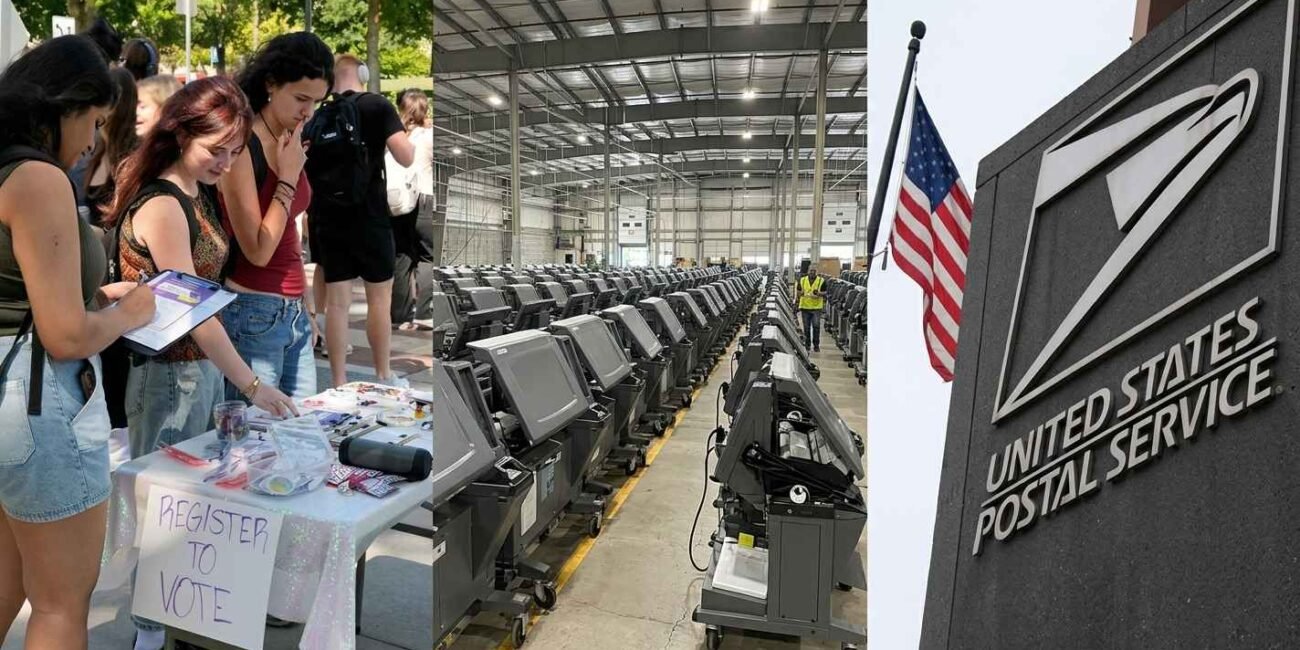
Registering to vote takes most Americans less than ten minutes and is required in every state except North Dakota before you can cast a ballot. Whether you’re registering for the first time, updating your registration after a move, or just double-checking you’re ready for the next election, this guide walks through exactly how to register to vote online, by mail, or in person — plus deadlines, eligibility rules, and what happens after you sign up. This guide is written to apply nationwide, since exact rules and deadlines differ state by state — wherever a specific rule varies, we’ll point you to the right official tool to confirm it for your own state.
Quick Answer: How Do I Register to Vote?
You can register to vote three ways: online through your state’s election website or vote.gov, by mail using the National Mail Voter Registration Form, or in person at your local election office, DMV, or a registration drive. You’ll need to confirm your citizenship, age, and residency, and most states set a registration deadline between 15 and 30 days before Election Day — though a growing number of states now allow same-day registration.
Why Voter Registration Matters
According to Nonprofit VOTE, the organization behind National Voter Registration Day, as many as one in four eligible Americans are not currently registered to vote. Most of those people aren’t opposed to voting — they simply missed a registration deadline, moved and never updated their address, or assumed they were already registered when they weren’t. Since National Voter Registration Day began in 2012, coordinated registration drives have helped sign up more than six million Americans, which shows just how many people get registered once the process is made simple and visible.
Who Is Eligible to Register to Vote?
Eligibility rules are set at the state level, so the exact requirements vary depending on where you live. That said, nearly every state shares the same basic requirements. According to the U.S. Election Assistance Commission, to register to vote you generally must be:
- A U.S. citizen
- At least 18 years old by Election Day (some states let 16- and 17-year-olds pre-register, and 17-year-olds may vote in a primary if they’ll turn 18 by the general election)
- A resident of the state where you’re registering, meeting that state’s minimum residency period
- Not currently serving a felony sentence in most states (rules on this vary significantly — some states restore voting rights automatically after release, others after completing parole or probation, and a few require an additional application)
- Not currently declared mentally incompetent by a court, in states that still apply this rule
If you’re unsure whether you qualify because of a past conviction, contact your state or local election office directly — rules differ enough from state to state that it’s worth confirming your specific situation rather than assuming.
What Documents Do You Need to Register to Vote?
Most states ask for a small set of basic information rather than a stack of paperwork. Typically you’ll need:
- Your full legal name and date of birth
- Your home address (where you actually live, not a P.O. box)
- A driver’s license or state ID number, or the last four digits of your Social Security number if you don’t have either
- Your signature (for mail-in or in-person forms)
Some states additionally require proof of residency, such as a utility bill or lease, especially if you’re registering in person without a state-issued ID. If you plan to vote in person, separately check your state’s voter ID law, since ID requirements to register and ID requirements to vote at the polls aren’t always the same.
3 Ways to Register to Vote
1. Register to Vote Online
Most states now offer online voter registration, and it’s typically the fastest option. Start at Vote.gov, the federal government’s official voter registration portal, which redirects you to your specific state’s online registration system. The process usually takes under ten minutes:
- Go to Vote.gov and select your state
- Enter your name, address, date of birth, and driver’s license or state ID number
- E-sign using your ID information (many states pull your signature directly from DMV records)
- Submit and save your confirmation
If your state doesn’t yet support fully online registration, Vote.gov will direct you to a printable form instead.
2. Register to Vote by Mail
You can also register using the National Mail Voter Registration Form, accepted in every state except North Dakota, New Hampshire, and Wyoming (which have their own state-specific forms). To register by mail:
- Download and print the National Mail Voter Registration Form from Vote.gov or the U.S. Election Assistance Commission’s website
- Fill in your personal details, address, and ID or Social Security number
- Sign and date the form
- Mail it to your state or county election office (the address is listed in the form’s state-specific instructions)
Mail-in registrations are usually considered valid based on the postmark date, but always check your state’s specific rule, since a few states require the form to be received, not just postmarked, by the deadline.
3. Register to Vote In Person
You can register in person at several types of locations, including:
- Your county or city election office
- The Department of Motor Vehicles (DMV) when you get or renew a license, thanks to the National Voter Registration Act, also known as the “Motor Voter” law
- Public assistance and disability services agencies in many states
- Voter registration drives, including events run around National Voter Registration Day each September
- On Election Day itself, in the states that allow same-day registration
In-person registration is a good option if you’d rather confirm everything face-to-face, or if you’re registering close to a deadline and want confirmation your form was received.
A Brief History of Voter Registration in the U.S.
Voter registration in the United States has changed significantly over the past three decades. The biggest shift came with the National Voter Registration Act of 1993, commonly known as the “Motor Voter” law, which required states to offer voter registration at DMV offices and certain public assistance agencies. The goal, as the law itself states, was to increase the number of eligible citizens registered to vote for federal office while also keeping voter rolls accurate and current.
Since then, states have continued to expand access. Online voter registration, largely unavailable two decades ago, is now offered by most states. Automatic voter registration — where eligible citizens are registered automatically through DMV visits unless they opt out — has also spread to a growing number of states, including Massachusetts and several others. Same-day registration, once rare, is now available in a meaningful share of states as well. Together, these changes mean registering to vote today is faster and more accessible than it has been at almost any point in the country’s history — the main barrier for most unregistered Americans now is simply not knowing the process, not a lack of available options.
Voter Registration Deadlines: What You Need to Know
There is no single national voter registration deadline — each state sets its own. According to Vote.gov, deadlines can be as early as 30 days before Election Day, though many states allow registration much closer to the election, and a growing group of states — including California, Colorado, Illinois, Maryland, Michigan, Minnesota, Vermont, and Washington, among others — offer same-day registration, letting eligible voters register and cast a ballot on the same visit, right up through Election Day itself.
Because deadlines and rules genuinely differ by state, the safest step is to check your own state’s exact date using your state’s official election website or the state lookup tool on Vote.gov, rather than relying on a generic date. If you’re registering ahead of the November 3, 2026 general election, most state deadlines will fall sometime in October — so it’s worth confirming and registering well before then rather than waiting until the last week.
States With Same-Day Voter Registration
A same-day registration state lets you register and vote in a single visit, either during early voting or on Election Day itself, instead of registering weeks in advance. As of the most recent election cycles, states offering some form of same-day registration include California, Colorado, Connecticut, Hawaii, Idaho, Illinois, Maine, Maryland, Michigan, Minnesota, Montana, Nevada, New Hampshire, New Mexico, North Carolina (during early voting only), Utah, Vermont, Washington, Washington D.C., and Wyoming. If you live in one of these places and miss the standard registration deadline, you generally haven’t lost your chance to vote — you’ll just need to register in person, often with an extra proof-of-residency document, when you show up to vote. Because state law can change from cycle to cycle, always confirm same-day registration availability directly with your state or county election office before relying on it.
States With Automatic Voter Registration
Automatic voter registration (AVR) flips the traditional process: instead of opting in, eligible citizens are automatically registered (or their existing registration is automatically updated) whenever they interact with a participating state agency, most commonly the DMV, unless they specifically opt out. More than 20 states and Washington D.C. have adopted some form of AVR over the past decade. If you’ve recently renewed a driver’s license or state ID in an AVR state, there’s a reasonable chance you’re already registered or your address is already up to date — but it’s still worth using your state’s “Am I Registered?” lookup tool to confirm rather than assuming.
How Long Does Voter Registration Take to Process?
Online registrations submitted through your state’s official portal are often processed within a few days to a couple of weeks, since the system checks your information directly against DMV records. Mail-in registrations typically take longer, since they depend on postal delivery time plus manual processing by your local election office — budget at least two to three weeks when registering by mail, especially closer to a registration deadline when election offices are handling higher volumes. This is also a good moment to bookmark your state’s official election website, since you’ll want to return to it not just for registration but for polling place info, sample ballots, and results after every election cycle going forward. In-person registration is usually the fastest to confirm, since staff can often tell you on the spot whether your form was accepted, though the official record may still take a few business days to appear in the statewide system. If you’re registering close to a deadline, online or in-person registration is generally the safer choice over mail, simply because there’s less that can go wrong with timing.
Special Registration Situations
You Recently Moved
If you’ve moved — even within the same city — you generally need to update your voter registration with your new address. Voter rolls are tied to your residential address, so an outdated address can mean being assigned to the wrong polling place or precinct. Update your registration the same way you’d register for the first time: online, by mail, or in person, before your new state or county’s deadline.
You Changed Your Name
A legal name change (through marriage, divorce, or any other legal process) typically requires you to update your voter registration as well, since your registration needs to match your current legal name and ID.
You’re in the Military or Living Overseas
Active-duty military members, their eligible family members, and U.S. citizens living abroad can register and vote by mail from anywhere in the world under the Uniformed and Overseas Citizens Absentee Voting Act (UOCAVA). Vote.gov and the Federal Voting Assistance Program both provide dedicated tools for this process, including the Federal Post Card Application, which can serve as both a registration and an absentee ballot request in one step.
You Don’t Have a Permanent Address
You don’t need a traditional home address to register and vote. If you’re experiencing homelessness or don’t have a fixed address, you can typically use a shelter, a friend’s or relative’s address, or even a description of where you usually stay (such as a specific intersection or park) as your registration address — rules vary by state, so check with your local election office for the exact process.
You Have a Past Felony Conviction
Voting rights after a felony conviction vary widely by state. Some states never take away the right to vote; some restore it automatically upon release from prison; others require you to complete parole or probation first; and a small number require a separate restoration process. If this applies to you, contact your state or local election office directly to confirm your current eligibility rather than assuming based on what you’ve heard about another state’s rules.
You’re 16 or 17 Years Old
Several states allow 16- and 17-year-olds to pre-register to vote, so their registration automatically activates the moment they turn 18. Even in states without formal pre-registration, some allow 17-year-olds who will turn 18 by the general election to vote in that year’s primary.
You’re a College Student
College students generally have a choice: register at their school address or keep their registration at their permanent home address and vote absentee. Neither option is automatically “more correct” — it depends on where you’d rather have a say in local elections, since school-address registration means voting in local races near campus, while home-address registration keeps you voting in your hometown’s races. What matters is picking one and sticking with it; you can’t be validly registered in two places at once, and switching each semester can create registration errors.
Registering for a Primary Election
If you live in a state with closed primaries, you’ll need to register with a political party to vote in that party’s primary — in open primary states, this isn’t required. When you register, most states ask whether you want to declare a party affiliation, but it’s usually optional in states with open primaries and doesn’t affect your ability to vote in the general election either way. If you want to change your declared party later, most states let you update it the same way you’d update any other registration detail, subject to that state’s own deadline for primary-related changes.
How to Check Your Voter Registration Status
Before assuming you’re all set, it’s worth confirming your registration is active, especially if you registered a while ago, recently moved, or haven’t voted in a few election cycles (some states periodically remove inactive voters from their rolls). Most state election websites offer a free “Am I Registered?” lookup tool where you enter your name, date of birth, and address to instantly see your registration status, party affiliation (if applicable), and assigned polling place. If your status shows as inactive or you can’t find your record at all, you’ll want to re-register well ahead of your state’s deadline.
National Voter Registration Day and the 2026 Election
Every September, thousands of nonprofits, businesses, schools, and local governments take part in National Voter Registration Day — a nonpartisan, nationwide effort to help unregistered Americans get registered in a single coordinated day. Founded in 2012, the campaign has helped register millions of voters and typically falls on the fourth Tuesday of September each year. It’s a useful reminder for anyone who has been putting off registering, since local libraries, campuses, and community organizations often run walk-up registration tables on and around that day.
This matters heading into the November 3, 2026 general election, when voters across the country will decide federal, state, and local races. Registration deadlines tied to that election generally fall in the weeks leading up to early and mid-October, depending on your state, so registering (or confirming your existing registration) sooner rather than later gives you the most flexibility if anything on your application needs to be corrected.
What Happens After You Register to Vote?
Once your registration is processed, most states mail you a voter registration card confirming your registration, polling place, and (in states with partisan primaries) your party affiliation. Importantly, that card is proof of registration — not a permission slip you need to bring with you. In most states, you don’t need it in hand to vote; your name simply needs to appear on the official voter rolls at your polling location. As Election Day approaches, keep an eye out for:
- A sample ballot mailed to your address, showing exactly what will appear on your ballot
- Information about your specific polling place and its hours
- If you live in a vote-by-mail state, your actual mail ballot and its return deadline
- Any notices about voter ID requirements specific to your state
How You Can Vote Once You’re Registered
Registration is the first step — how you actually cast your ballot depends on your state’s rules and your own preference:
- In-person on Election Day: Vote at your assigned polling place, found using your state’s polling place lookup tool.
- Early in-person voting: Most states offer a window of days or weeks before Election Day to vote in person at designated early voting locations.
- Vote by mail / absentee: Several states mail every registered voter a ballot automatically, while others require you to request an absentee ballot; check your state’s specific process and return deadline.
Whichever method you choose, being registered with a current, accurate address is what makes all three options available to you — which is exactly why keeping your registration up to date matters as much as registering in the first place.
Common Voter Registration Mistakes to Avoid
- Waiting until the last minute. Even in states with generous deadlines, processing errors or missing information can cause delays — register with time to spare.
- Forgetting to update your address after moving. An old address can send you to the wrong polling place or get your ballot mailed to a previous residence.
- Assuming you’re automatically registered. Automatic voter registration exists in a growing number of states (often through the DMV), but it’s not universal — don’t assume without checking.
- Not checking your status before Election Day. A quick status check can catch problems — like being mistakenly purged from the rolls — while there’s still time to fix them.
- Mixing up registration ID rules with poll ID rules. The ID you need to register and the ID you need to show at your polling place aren’t always the same — check both separately.
Tips for a Smooth Voter Registration
- Register well before the deadline, not on the last day — this leaves time to fix any errors or missing information.
- Double-check your address spelling and unit number, since a small mismatch with your ID can cause processing delays.
- Save or screenshot your confirmation after registering online, in case you need to follow up with your election office.
- Set a calendar reminder to check your registration status a few weeks before each election, especially if you haven’t voted recently.
- Tell family members and roommates who may also be unregistered — registration drives and online tools work just as well for the people around you.
Trusted Resources for Voter Registration
These official and nonpartisan sources are the most reliable places to register, check your status, or get answers to state-specific questions:
- Vote.gov — the federal government’s official voter registration portal, with links to every state’s registration system
- U.S. Election Assistance Commission — federal registration requirements and the printable National Mail Voter Registration Form
- USA.gov — Who Can and Cannot Vote — detailed eligibility rules, including for citizens living abroad
- Vote.org — State Voter Registration Rules — a state-by-state breakdown of eligibility and deadlines
- National Voter Registration Day — find local registration drives and events near you
Frequently Asked Questions About Registering to Vote
How do I register to vote?
You can register online through Vote.gov or your state’s election website, by mailing in the National Mail Voter Registration Form, or in person at your local election office, DMV, or a registration drive. You’ll need your name, address, date of birth, and a driver’s license, state ID, or the last four digits of your Social Security number. Whatever method you choose — online, by mail, or in person — the process is free, straightforward, and open to every eligible citizen.
Is it too late to register to vote?
It depends on your state. Most states set a deadline between 15 and 30 days before Election Day, but several states offer same-day registration, meaning you can register and vote on the same visit right up through Election Day itself. Check your state’s specific deadline to know for sure.
How do I know if I’m already registered to vote?
Use your state election office’s “Am I Registered?” lookup tool, available on most state election websites, and enter your name, date of birth, and address to check your current status and assigned polling place.
Do I need an ID to register to vote?
Most states ask for a driver’s license or state ID number, or the last four digits of your Social Security number if you don’t have one. Separately, many states also require ID when you actually vote in person — check your state’s voter ID rules, since they aren’t always the same as the registration requirements.
Can I register to vote if I have a felony conviction?
It depends entirely on your state. Some states never revoke voting rights, some restore them automatically after release from prison, others require completed parole or probation, and a few require a separate restoration process. Contact your state or local election office to confirm your specific eligibility.
What is National Voter Registration Day?
National Voter Registration Day is a nonpartisan, nationwide civic holiday held every September, typically the fourth Tuesday of the month, when thousands of organizations run coordinated voter registration drives across the country.
Can I register to vote without a permanent address?
Yes. You don’t need a traditional home address to register. If you don’t have a fixed address, you can typically use a shelter, another person’s address, or a description of where you usually stay, depending on your state’s specific rules.
How do military and overseas citizens register to vote?
Active-duty service members, their eligible family members, and U.S. citizens living abroad can register and request an absentee ballot together using the Federal Post Card Application under the Uniformed and Overseas Citizens Absentee Voting Act (UOCAVA).
Do I need to re-register every time I move?
Yes, you should update your voter registration with your new address any time you move, even within the same city, to make sure you’re assigned the correct polling place and receive the correct ballot.
Can I register to vote at the DMV?
Yes. Under the National Voter Registration Act (the “Motor Voter” law), every state must offer voter registration when you apply for or renew a driver’s license or state ID at the DMV.
Should I register at my school address or my home address as a student?
Either is valid — you just need to pick one and register consistently, since you can only be validly registered in one place at a time. Registering at school lets you vote in local races near campus; registering at home keeps you voting in your hometown’s elections.
What if I registered but never received a confirmation?
Use your state’s “Am I Registered?” lookup tool to check your status directly. If you can’t find your record after a reasonable processing period, contact your local election office or simply re-register to be safe, especially if a deadline is approaching.
Is registering to vote free?
Yes. Registering to vote is completely free in every state, whether you register online, by mail, or in person.
Voter registration is a one-time process that takes only a few minutes but determines whether your voice counts on Election Day. Whether you register online through Vote.gov, mail in a form, or sign up in person, the most important step is simply not putting it off until your state’s deadline has passed. With the November 3, 2026 general election approaching, take a few minutes now to register, update your address if you’ve moved, or confirm your existing registration status — and consider joining a National Voter Registration Day event in your community to help others get #VoteReady too. Registering only once won’t automatically keep you covered forever — make it a habit to check your status after any move, name change, or long gap between elections, so you’re never caught off guard when a deadline arrives. It’s a small habit that pays off every election, not just this one. Browse our latest guides and articles for more explainers like this one.

The Seecom is your trusted source for unbiased reviews, expert analysis, and comprehensive comparisons to help you choose with confidence.

Other Articles

Sydney Sweeney Sports Ad: The Full Controversy Explained
Widow’s Bay: Record-Breaking Emmy 2026 Wins, Cast, Plot & Season 2 Guide