






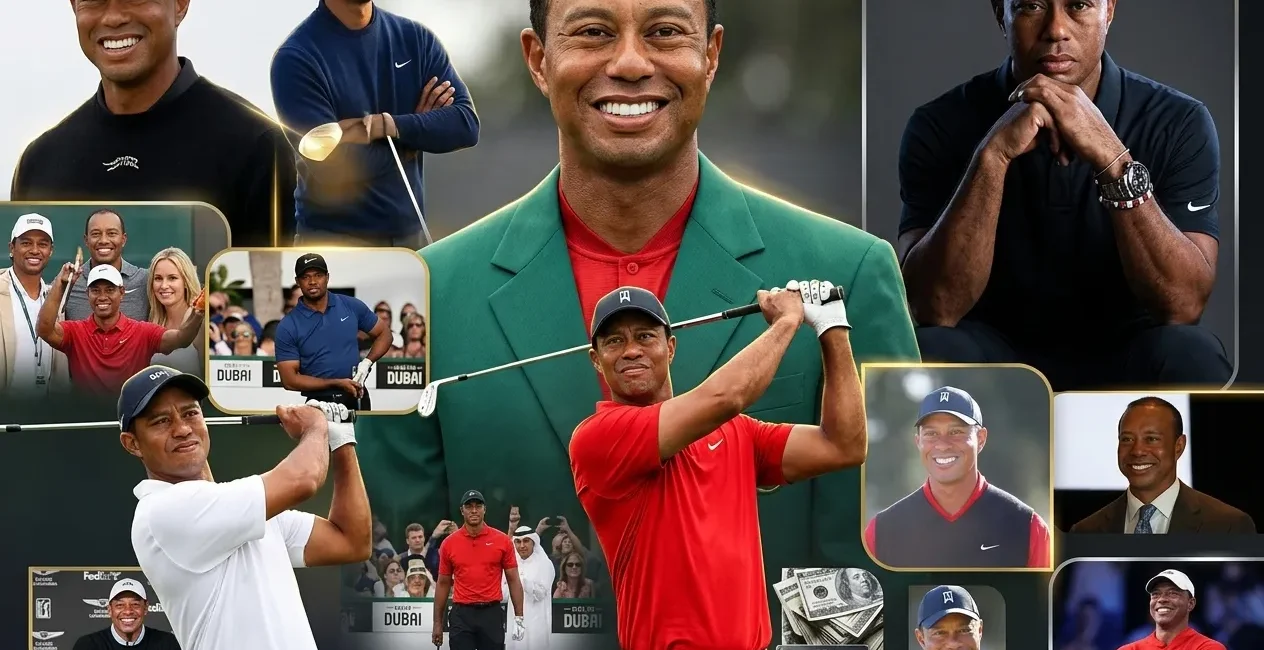
Tiger Woods is not just one of the greatest golfers of all time — he’s also one of the wealthiest athletes on the planet. While his 82 PGA Tour wins and 15 major championships cemented his legacy on the course, it’s his business empire off the course that has pushed his fortune into billionaire territory.
As of 2026, Forbes estimates Tiger Woods’ real-time net worth at roughly $1.5 billion, a figure built not just from tournament winnings but from decades of endorsements, equity stakes, and ventures he co-founded himself. In this guide, we break down exactly how Tiger Woods built his fortune, what his biggest assets are, and where his wealth is likely headed next.
Tiger Woods Net Worth: Quick Facts
- Estimated Net Worth (2026): ~$1.5 billion (Forbes real-time estimate)
- Career PGA Tour Prize Money: Over $121 million
- Career Earnings (prize money + off-course income): Nearly $2 billion
- Major Championships Won: 15
- PGA Tour Wins: 82 (tied for the all-time record)
- Key Ventures: Sun Day Red, PopStroke, Full Swing Golf, TGL, TGR Design
Net worth estimates for any public figure vary by source and methodology, and Tiger Woods is no exception — some trackers place his fortune closer to the $800 million–$1.1 billion range, while Forbes currently estimates Woods’ real-time net worth at $1.5 billion, according to Sports Illustrated’s coverage of his finances. For this guide, we’ll primarily reference the Forbes figure, since it’s the most frequently cited benchmark in financial and sports media.
How Much Has Tiger Woods Earned in Prize Money?
Tiger Woods holds the record for the most career earnings in PGA Tour history. According to Sports Illustrated’s breakdown of his finances, Woods has earned $121 million on the course, which the outlet notes represents only a small slice of his total fortune when you factor in endorsements, investments, and business ventures.
The PGA Tour’s official site tracks all-time money leaders, where Woods has topped the list for years, a remarkable feat considering he’s played a significantly reduced schedule since his 2021 car accident due to ongoing injuries.
Tiger Woods’ Endorsement History: From Nike to Sun Day Red
For 27 years, Nike was synonymous with Tiger Woods. The partnership began with his iconic “Hello, World” campaign when he turned pro in 1996, and it became one of the most recognizable athlete-brand relationships in sports history.
In early 2024, Woods and Nike officially parted ways. Soon after, he unveiled a new venture with TaylorMade Golf called Sun Day Red, a lifestyle apparel and footwear brand. As the Associated Press reported via the Hawaii Tribune-Herald, the brand name pays tribute to Woods’ long-standing habit of wearing red on the final day of tournaments, a tradition his mother, Kultida, told him was his “power color.”
TaylorMade Golf, which Woods has used for his clubs for years, serves as the parent company behind Sun Day Red, and according to Golf Business News’ coverage of the launch, the brand operates as its own standalone unit with dedicated leadership, designers, and headquarters — not just a licensing deal.
Beyond apparel, Woods has had deals over the years with brands like Rolex, Bridgestone, and Monster Energy, though exact terms of most endorsement contracts are not publicly disclosed.
Tiger Woods’ Business Ventures and Investments
Tiger Woods has diversified far beyond golf endorsements into a genuine portfolio of businesses:
Full Swing Golf
Woods is both an investor and brand ambassador for Full Swing Golf, a golf simulator and technology company. One of his long-running business relationships in this space recently received a major valuation boost, with the company’s deal reportedly valued at over $500 million, according to Sports Illustrated’s 2026 financial breakdown of Woods’ holdings.
PopStroke
Co-founded by Woods and entrepreneur Greg Bartoli in 2018–2019, PopStroke is a technology-infused putting entertainment concept combining 18-hole putting courses with full-service dining. The venture has expanded rapidly — press releases from PopStroke’s own site confirm openings across Florida, Arizona, and Texas, with TaylorMade Golf later joining as a strategic investor. As of March 2026, the chain operates 17 locations nationwide with further expansion planned.
TGL (TMRW Golf League)
Woods, Rory McIlroy, and sports executive Mike McCarley co-founded TGL, a tech-infused golf league played in partnership with the PGA Tour. Per TGL’s official site, Woods is part-owner and a player for Jupiter Links Golf Club, one of six franchises in the league. Wikipedia’s entry on TGL notes the league’s parent company, TMRW Sports, has been valued in the hundreds of millions as the venture has grown.
TGR Ventures, TGR Design & TGR Foundation
Woods’ off-course ventures are unified under the TGR brand. TGR Foundation, originally founded as the Tiger Woods Foundation in 1996, focuses on STEM education and scholarships for underserved youth, funded in part by golf events Woods hosts, including the Genesis Invitational.
Tiger Woods’ Real Estate and Major Assets
Woods’ primary residence is a 12-acre waterfront estate on Jupiter Island, Florida, reportedly worth around $54 million. The property includes a private golf practice facility, pool, and direct ocean access.
His other notable assets commonly cited across financial trackers include a private yacht and a private jet, though exact current valuations of these assets fluctuate and aren’t independently verified by Woods or his team.
Beyond the Jupiter Island estate, Woods’ TGR Ventures umbrella also owns The Woods Jupiter, a restaurant in Florida that reflects his broader push into hospitality alongside golf entertainment. Combined with his stake in PopStroke’s growing food-and-beverage-driven putting venues, these hospitality assets form a smaller but still meaningful slice of his overall net worth, separate from his core golf-related holdings.
The PGA Tour’s Player Impact Program and Tiger Woods
The PGA Tour’s Player Impact Program (PIP) was created to reward players who generate the most fan engagement and media value for the Tour, regardless of where they finish on the leaderboard. Woods won the inaugural PIP bonus in 2021, earning $8 million, and picked up another $10 million in 2024 before the program was restructured. These bonus payments added tens of millions to his off-course earnings even during years when injuries limited his playing schedule.
How Tiger Woods’ Net Worth Compares to Other Golfers
Tiger Woods’ fortune puts him in a different financial category than almost every other professional golfer, active or retired. While stars like Rory McIlroy and Phil Mickelson have built substantial wealth through tournament winnings and endorsement deals, neither has matched Woods’ combination of record-breaking prize money, a multi-decade Nike partnership, and a self-built portfolio of standalone companies like Sun Day Red, PopStroke, and TGL.
For context on how other athletes and public figures build and track their wealth, outlets like Forbes and ESPN regularly publish athlete net worth and earnings breakdowns worth cross-referencing.
It’s also worth noting that most of golf’s other top earners built their wealth almost entirely through performance-based income — tournament winnings, equipment contracts, and apparel deals tied directly to how often they play and how well they finish. Woods’ situation is structurally different. Because he holds equity and ownership stakes in the companies behind Sun Day Red, PopStroke, Full Swing Golf, and TGL, a meaningful share of his net worth growth is now decoupled from his tournament schedule. That distinction matters for anyone trying to understand why his wealth has kept climbing even during stretches when injuries limited him to just a handful of competitive rounds per year.
Where Tiger Woods’ Wealth Actually Comes From
Breaking down a billion-dollar fortune into its component parts is never an exact science, since most of the underlying contracts and valuations are private. That said, based on the public reporting referenced throughout this guide, Woods’ net worth is generally understood to be built from four overlapping sources:
- On-course prize money – Over $121 million earned directly from PGA Tour events across his career, the most of any golfer in history.
- Endorsement and licensing income – Decades of Nike earnings, followed by his current Sun Day Red/TaylorMade partnership, plus smaller deals with brands like Rolex and Bridgestone over the years.
- Business equity and ownership stakes – His ownership positions in PopStroke, Full Swing Golf, TGL’s Jupiter Links Golf Club, and TGR Design, several of which have seen their valuations rise sharply as the ventures have expanded.
- Appearance fees and bonus programs – Including PGA Tour Player Impact Program payouts, which alone added roughly $18 million between 2021 and 2024.
It’s this combination — rather than any single source — that explains why Woods’ fortune has continued to grow even as his playing schedule has shrunk dramatically since 2021.
Tiger Woods’ Career Achievements That Built His Brand Value
Woods’ earning power off the course has always been tied directly to what he accomplished on it. A quick look at the record book explains why sponsors, business partners, and tour organizers have been willing to pay a premium to be associated with his name:
- 15 Major Championships, including 5 Masters titles tracked on the Masters’ official site
- 82 PGA Tour wins, tied for the all-time record, per PGA Tour statistics
- 3 U.S. Open titles, with results archived by the USGA
- 3 Open Championship wins, documented on The Open’s official site
- 4 PGA Championship titles, with historical results available via PGA.com
- 683 consecutive weeks as the World No. 1 golfer at his peak, a record that remains unmatched in the sport
This level of sustained dominance is exactly what made Woods the rare athlete whose personal brand could support standalone businesses rather than endorsement income alone — a distinction golf media outlets like Golfweek and Sports Illustrated’s golf coverage have pointed to repeatedly when explaining his unusual earning trajectory compared to his peers.
Tiger Woods’ Career Earnings Timeline
- 1996: Turns pro, signs historic Nike endorsement deal (“Hello, World”)
- 1997–2008: Dominant PGA Tour run, multiple major championships, peak endorsement value
- 2009–2010: Personal scandal leads to loss of several sponsorships
- 2017: Spinal fusion surgery; career comeback begins
- 2019: Wins the Masters, his 15th major, completing one of sports’ greatest comebacks
- 2021: Serious car accident; near career-ending leg injuries
- 2022: Co-founds TGL with Rory McIlroy and Mike McCarley
- 2024: Nike partnership ends after 27 years; launches Sun Day Red with TaylorMade
- 2025–2026: TGL’s inaugural season launches; PopStroke expands to 17+ locations; Forbes estimates net worth near $1.5 billion
What’s Next for Tiger Woods’ Fortune?
Even as his competitive playing schedule has shrunk due to injuries, Woods’ income streams have shifted toward ownership and brand equity rather than tournament winnings alone. Continued growth at PopStroke, further investment in Full Swing Golf, the long-term trajectory of TGL, and the ongoing rollout of Sun Day Red all suggest his net worth is more likely to keep climbing through business value than through additional prize money.
Industry watchers at outlets like Golf Digest and Golf.com continue to track these ventures closely, given Woods’ outsized influence on the sport’s business side even in a reduced on-course role.
Frequently Asked Questions
Q1: What is Tiger Woods’ net worth in 2026?
Forbes currently estimates Tiger Woods’ real-time net worth at approximately $1.5 billion, though some other trackers place the figure lower, in the $800 million to $1.1 billion range.
Q2: How did Tiger Woods become a billionaire?
Woods built his fortune through a combination of record PGA Tour prize money, decades of endorsement deals (most notably with Nike and now Sun Day Red/TaylorMade), and equity in businesses he co-founded, including PopStroke, Full Swing Golf, and TGL.
Q3: How much prize money has Tiger Woods won in his career?
Woods has earned over $121 million in official PGA Tour prize money, the most of any golfer in Tour history.
Q4: What happened with Tiger Woods and Nike?
Woods and Nike ended their 27-year partnership in early 2024. Shortly after, Woods launched Sun Day Red, a new apparel and footwear brand in partnership with TaylorMade Golf.
Q5: What businesses does Tiger Woods own?
Woods has ownership or investment stakes in PopStroke, Full Swing Golf, TGL (through Jupiter Links Golf Club), Sun Day Red, and TGR Design, among other ventures under his TGR Ventures umbrella.
Tiger Woods’ net worth tells a story that goes well beyond golf. While his on-course record — 82 PGA Tour wins and 15 majors — secured his legacy as one of the sport’s greatest players, it’s his willingness to build and invest in businesses like PopStroke, Full Swing Golf, and TGL that has turned him into one of the wealthiest athletes in history. As his ventures continue to mature, Tiger Woods’ fortune looks set to keep growing long after his competitive playing days are over.
(Note: Net worth figures for any public figure are estimates compiled by financial media from public and semi-public information — they are not official disclosures. Figures can vary significantly between sources and change frequently.)
How Net Worth Figures Like This Are Actually Calculated
It’s worth understanding how outlets like Forbes arrive at a number like $1.5 billion in the first place, since “net worth” for a private individual is never as simple as checking a bank balance. Analysts typically combine several inputs: publicly reported career earnings, estimated endorsement income based on comparable deals in the industry, the value of real estate holdings using public property records, and — for ventures like PopStroke, Full Swing Golf, or TGL — valuation multiples applied to reported funding rounds or investment stakes.
Because so much of this relies on estimates rather than disclosed figures, it’s normal to see a range of numbers reported for the same person depending on the outlet, the date of publication, and the methodology used. That’s part of why this guide references multiple figures rather than presenting a single number as definitive — readers researching Tiger Woods’ net worth should treat any specific figure, including the $1.5 billion estimate, as the best available approximation rather than an audited fact.
For readers who want to go deeper on methodology, Forbes publishes its own explanation of how it tracks athlete and celebrity wealth on its real-time billionaires coverage, which is a useful reference point for understanding why these figures shift from one update to the next.

The Seecom is your trusted source for unbiased reviews, expert analysis, and comprehensive comparisons to help you choose with confidence.

Other Articles
Best Movies of All Time